Plant-Based Adaptogenic Herbs
An educational exploration of traditionally-used plant herbs: their historical use in Southeast Asia, bioactive compounds, and roles in supporting cellular health processes.
Understanding Adaptogenic Herbs
Adaptogenic herbs are plants containing bioactive compounds that have been used in traditional medicine systems for centuries. The term "adaptogenic" reflects the concept that these plants may help the body adapt to various stressors. While traditional use spans thousands of years, modern research is ongoing to understand the mechanisms of action and bioavailability of specific compounds.
Common adaptogenic herbs include turmeric, ginger, ashwagandha, rhodiola, and others. Many originate from Southeast Asia and continue to be central to regional cuisines and traditional health practices.
Turmeric (Curcuma longa)
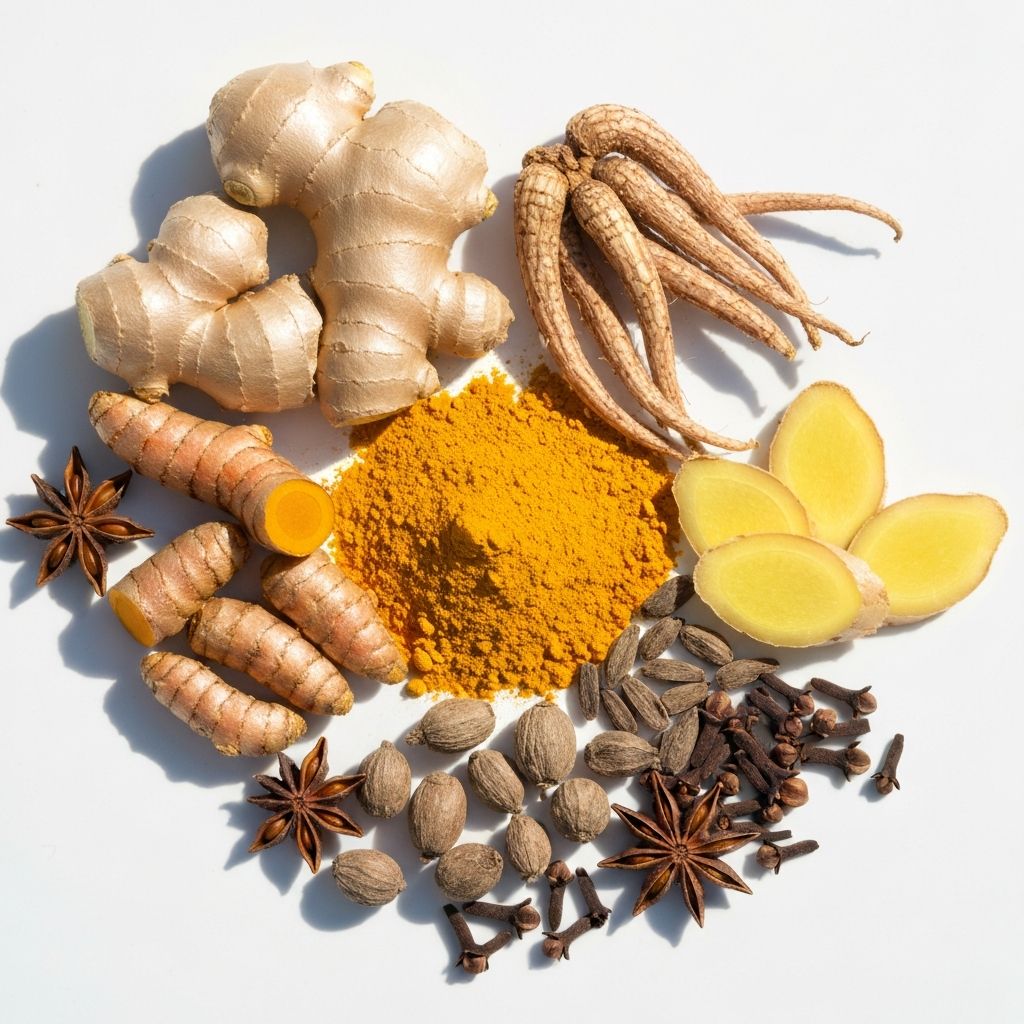
Traditional Use in Southeast Asia
Turmeric has been used in Indian, Indonesian, and other Southeast Asian cuisines for thousands of years. It is central to Ayurvedic medicine and traditional Indonesian healing practices. Fresh turmeric root and dried powder are dietary staples, used in curries, soups, and traditional drinks.
Bioactive Compounds
Turmeric's characteristic yellow color comes from curcuminoids, primarily curcumin. These compounds are thought to function as antioxidants and support various cellular processes. The rhizome (underground stem) also contains essential oils and other phenolic compounds. Traditional preparations often combine turmeric with black pepper, which contains piperine—a compound that may enhance curcumin absorption.
Use in Daily Nutrition
Turmeric is incorporated into everyday meals rather than consumed as an isolated supplement. Traditional golden milk, turmeric in curries, and fresh turmeric tea are common preparations. The combination with fat and black pepper in traditional recipes may support optimal bioavailability.
Ginger (Zingiber officinale)
Traditional Use
Ginger is another ancient ingredient in Southeast Asian cooking and traditional medicine. Fresh ginger root is used in cooking, and dried ginger appears in spice blends. It has been valued for its warming properties and is often used in soups, curries, and teas.
Bioactive Compounds
Ginger's pungent compounds include gingerols and shogaols, formed when ginger is dried or heated. The rhizome contains essential oils, resins, and polysaccharides. These compounds are thought to have various cellular actions supporting antioxidant and anti-inflammatory processes.
Integration in Everyday Diet
Ginger is naturally integrated into Indonesian and Southeast Asian cuisines: ginger in soups, curries, stir-fries, marinades, and traditional beverages. This culinary tradition reflects historical recognition of ginger's beneficial compounds.
Other Adaptogenic Herbs
Ashwagandha (Withania somnifera)
An herb used in Ayurvedic medicine, ashwagandha root contains withanolides and alkaloids. The root has been traditionally used in Indian practices for general wellness. Modern use has expanded globally, though it is less prominent in everyday Indonesian cuisine than turmeric or ginger.
Galangal (Alpinia galanga)
Related to ginger and native to Southeast Asia, galangal is used in Thai and Indonesian cuisines. The rhizome contains essential oils and phenolic compounds and has been used traditionally in regional medicine.
Holy Basil (Ocimum tenuiflorum)
Also known as tulsi, this herb is sacred in Hindu tradition and used in Ayurvedic medicine. It contains essential oils and polyphenols. While less common in everyday Indonesian cooking than turmeric or ginger, it appears in traditional herbal preparations and teas.
Lemongrass (Cymbopogon citratus)
A fragrant herb common in Southeast Asian cooking, lemongrass contains essential oils and has been traditionally used in regional medicine. It is a culinary staple in soups, curries, and beverages.
Bioactive Compounds and Cellular Health
General Mechanisms
The bioactive compounds in adaptogenic herbs are thought to support cellular health through several mechanisms:
- Antioxidant Activity: Many compounds neutralize free radicals and reduce oxidative stress in cells.
- Support for Cellular Signaling: Some compounds interact with cellular receptors and signaling pathways involved in inflammation and stress responses.
- Enzyme Activity: Bioactive compounds may influence the activity of key enzymes involved in cellular metabolism.
Traditional vs. Modern Understanding
Traditional uses of these herbs evolved through centuries of observation. Modern scientific investigation examines specific compounds and their mechanisms of action. Some traditional uses align with modern research findings, while others require further investigation. The educational purpose of this resource is to explain the historical and current scientific understanding, not to make medical claims.
Incorporating Adaptogenic Herbs into Daily Life
Culinary Integration
The most accessible way to benefit from adaptogenic herbs is through everyday cooking:
- Use fresh turmeric and ginger in curries, soups, and stir-fries
- Prepare traditional beverages: golden milk, ginger tea, turmeric drinks
- Season marinades and dressings with these herbs
- Add to broths and stocks for depth and bioactive compounds
Quality and Variety
Using fresh or minimally processed herbs from reliable sources ensures quality. Rotating between different adaptogenic herbs and combining them with other nutrient-dense foods supports a comprehensive nutritional approach. Traditional combinations, such as turmeric with black pepper or ginger with honey, reflect cultural wisdom about bioavailability and synergistic effects.
Balance in Dietary Practice
Adaptogenic herbs are best viewed as part of an overall balanced diet, not as standalone remedies. Combined with diverse vegetables, proteins, whole grains, and healthy fats, they contribute to nutritional completeness and support general wellness practices.
Explore All Nutrition Topics
Return to categories or discover more about everyday nutrition and dietary practices.